Aftermarket Parts Ontario Canada

CLIENT
AFTERMARKET PARTS
LOCATION
ONTARIO, CANADA
PRODUCTS
TRAFFIC ARROWS
Positioning traffic directors correctly on the backs of emergency vehicles is critical to ensuring that traffic flows safely and efficiently. However, high-mounted traffic directors can block other indicators such as a third brake light, compromising traffic safety.
SWS Warning Lights developed the perfect solution to help maintain traffic safety.
THE NEED
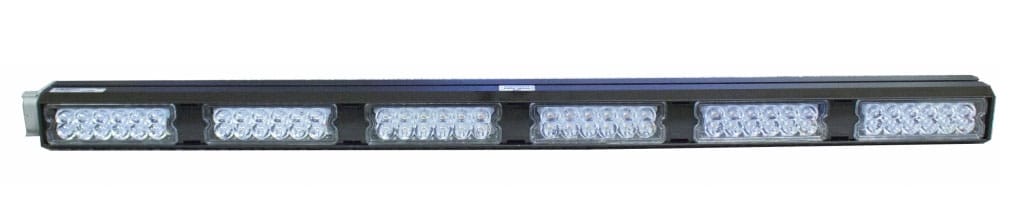
Traffic directors have traditionally consisted of a single long system of four or more light elements flashed in a sequence to convey the intent of the desired direction for traffic to move. However, they tended to be mounted high to maximize visibility, blocking the center high-mounted stop light (CHMSL, or third brake light). Lowering the traffic director would minimize its effectiveness, forcing users to choose between having the CHMSL visible or maximizing the traffic director’s effectiveness.
THE SOLUTION
SWS’s engineers utilized the latest LED technology to develop a traffic director that provided dynamic traffic directing patterns. The new units incorporated a set of red LEDs that could connect to a vehicle’s stop/turn/tail lighting system, allowing traffic directors to be mounted high over the CHMSL, while the internal red LEDs acted as a pseudo third brake light.

PRODUCTS USED
57448 TRAFFIC DIRECTOR FLEET PLUS SERIES
SPECIFICATIONS
Technology: LED
Mount Style: Permanent
Input Voltage: 12VDC
Emitting: Amber
Sae Class: SAE J595(2014) Class 1
Warranty: 5 Years
Vdc: 12
Amps: 5.25A
Dimension: 62 1/2″ L x 32 5/8″ H x 4 3/8″ D”
Ship Weight: 25.0 lbs
THE RESULTS
SWS’s 57448 traffic director utilizes four high-brightness red LEDs to act as a stoplight, as well as running lights and turn signals. We also added four high brightness white LEDs and special flood optics to provide an integrated floodlight controllable from the same control box, further enhancing the unit’s functionality.
The final product allowed the traffic directors to work with maximum effectiveness, while preserving the driver’s ability to signal stopping, turning, or lane change intention.