
Why More Fleets Are Moving Beyond Amber – and What That Means for Roadside Safety
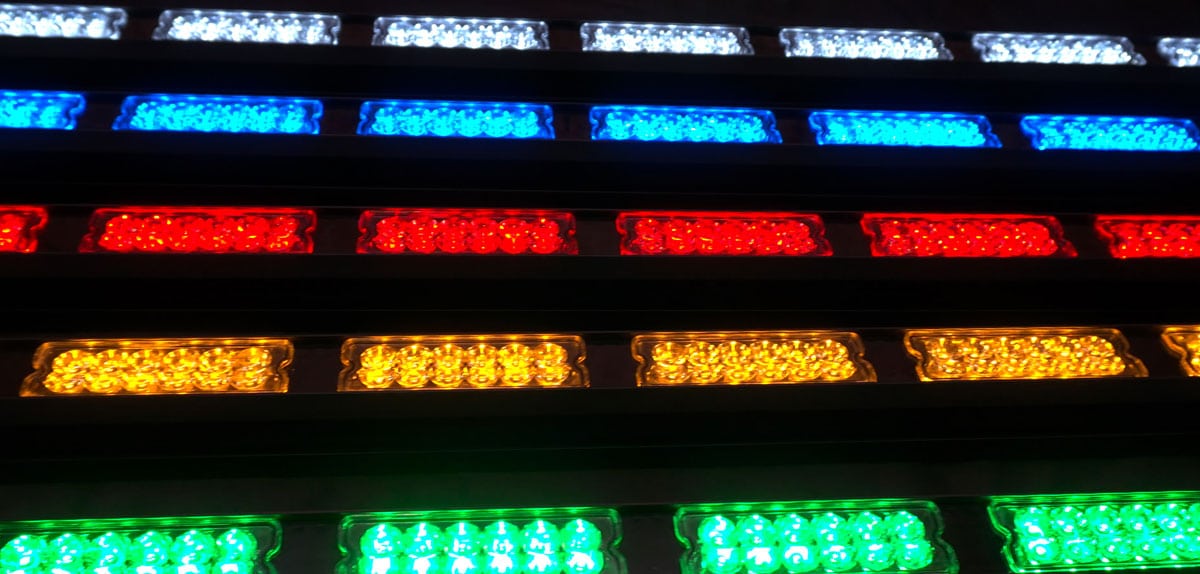
A visibility trend backed by emerging research – and a call to action for fleet safety leaders.
For decades, amber lights have been the universal signal on North American roads: slow down, pay attention, someone is working ahead.
But in the last few years, more municipal, utility, snow and ice, commercial, and highway maintenance fleets have been reevaluating whether amber alone gets the response their crews need.
If your operators have mentioned that “drivers just don’t react the same way anymore,” you’re not imagining it. The data is beginning to show why.
This moment presents an important opportunity: not to abandon amber, but to strengthen your visibility strategy in a world where roadside conditions and driver behavior have changed.
The Research: Why Amber Alone May No Longer Be Enough
- Driver habituation is real-and growing.
Several transportation studies suggest that when drivers see a warning signal too often, they respond to it less urgently.
A 2020–2023 FHWA/NCHRP review notes that drivers demonstrate reduced sensitivity to familiar colours and patterns, especially in environments overloaded with visual information.
Amber is everywhere now. And that familiarity can reduce its impact.
- Alternate or supplemental colours improve driver response.
The Minnesota Department of Transportation conducted a landmark study on work-zone lighting. The results were clear:
- Trucks with blue + amber lighting saw significantly higher lane-change compliance
- Drivers recognized the hazard earlier and adjusted sooner
This supports what many fleets report anecdotally: when a light looks different, drivers react differently – often with more caution.
- White LEDs and contrasting colours increase visibility in challenging conditions.
The Kentucky Transportation Center found that combining white and amber LEDs dramatically improved conspicuity in snow, fog, daylight glare, and roadside clutter:
- White LEDs cut through bright and low-light conditions
- Amber provided the traditional hazard cue
- The contrast improved recognition distance
This is especially relevant for snow fleets, utility trucks, construction, and tow operators working in low-contrast environments.
- Modern LED studies show that colour contrast improves hazard recognition.
Transportation Research Record and Journal of Safety Research publications (2016–2024) show:
- Multi-colour lighting improves detection distances
- Drivers react faster when colours differentiate task types
- Brighter amber alone does not compensate for reduced driver attention
Brightness matters – but contrast matters more.
- Safety regulators are acknowledging the need for enhanced visibility.
WorkSafeBC and Alberta OHS (2019–2024) have updated several bulletins recommending:
- Greater use of high-visibility lighting
- Enhanced contrast between equipment and background conditions
- Modernization of outdated visibility standards
These regulators are not mandating alternate colours yet – but they are acknowledging the same issue fleets are raising: amber-only systems are becoming easier for drivers to overlook.
A Critical Canadian Example: Ontario MTO’s Blue + Amber Snow-Plow Study
A major real-world validation of multi-colour visibility comes from the work we supported with the Ontario Ministry of Transportation (MTO). In its multi-year visibility assessment of winter maintenance vehicles, MTO evaluated numerous lighting combinations across day, night, blowing snow, and low-contrast conditions.
The findings were definitive:
Snow-removal vehicles equipped with blue + amber LEDs were detected earlier, recognized more quickly, and generated stronger, more reliable driver response compared to amber alone.
Blue, in particular, proved highly conspicuous at lower intensities, reducing glare while significantly improving visibility through winter storm conditions.
Building on these results, we collaborated with MTO to develop a safer highway snow-plow lighting package – integrating multi-colour contrast, clearer directional signalling, and reduced washout in white-out conditions. Ontario’s eventual adoption of blue lighting on highway snow plows stands as one of the strongest demonstrations that colour contrast saves time – and time saves lives.
This Canadian example sits alongside U.S. research as proof that enhanced visibility is not a trend: it’s a measurable, validated safety improvement.
Why Fleets Are Taking Action Now
Beyond the research, the real momentum comes from front-line operators and supervisors. Many fleets report:
✔ Drivers aren’t slowing down as reliably when they see amber
Especially in high-traffic corridors or routine maintenance zones.
✔ Worksites are getting more complex
More attachments, more role-specific tasks, and more need for clear visual communication.
✔ Distracted driving is increasing
Smartphones, onboard screens, and environmental clutter compete with warning cues.
✔ Weather patterns are changing
More fog, more snow, more rapid transitions – all of which challenge traditional amber visibility.
Together, these factors push fleets to seek lighting strategies that create contrast, clarity, and faster recognition.
What This Looks Like in the Field
Fleets aren’t replacing amber – they’re enhancing it.
Many are developing tiered visibility plans that include:
- Amber → general caution
- White → enhanced visibility in low-contrast weather
- Green → attention cue for specific operational roles
- Blue → improved hazard recognition where permitted
- Directional patterns → clear communication of movement and intent
This approach aligns with SWS’s commitment to safety, reliability, customization, and client-centred problem-solving.
Making This a Call to Action – Not Just a Trend Report
Amber isn’t “obsolete.”
But the road has changed.
Drivers have changed.
And visibility strategies need to evolve with them.
This shift represents an opportunity for fleets to:
- Improve roadside safety
- Reduce near-miss incidents
- Support operators in demanding environments
- Strengthen compliance confidence
- Modernize their fleet without major operational disruption
If your operators are noticing that amber isn’t getting the same response from drivers, this is the right moment to take a closer look.
A visibility strategy built around colour contrast isn’t complicated – and it can make a real difference in how safely and confidently your team works.
We’re here to walk through your options, answer questions, and make the process easy.
Closing Thought
Your crews deserve lighting they never have to second-guess – lighting that earns the respect of passing drivers, even in the most challenging conditions.
As more fleets explore supplemental colours, it’s clear this isn’t a fad.
It’s a broader commitment to keeping people safe in a world where attention is harder to capture and roadside risks are increasing.
If you’d like support evaluating options for your fleet, SWS is here for you.